
This isn’t an article about artificial intelligence. It’s about why intelligent business leaders often misjudge transformational change, and why changing consumer behavior requires us to rethink how marketing is measured.
Think back to November 2022. When ChatGPT launched, what was your instinctive reaction?
Did you dismiss it as another chatbot? Assume it would never replace Google? Write it off as overhyped? Or were you convinced it would change everything? Whatever your reaction… it wasn’t purely objective.
Your brain interpreted this unfamiliar technology through the lens of everything it had learned before November 2022. In other words, it made a prediction about the future based on the past.
That doesn’t mean your conclusion was wrong. It does, however, raise an uncomfortable question.
How many of today’s technology decisions are still being filtered through yesterday’s assumptions?
History suggests this isn’t a new phenomenon. Every major technological shift follows a familiar pattern. It’s initially underestimated, then overestimated before eventually becoming so embedded in everyday life that we forget it was ever considered disruptive. The internet, smartphones, social media, cloud computing and now artificial intelligence have all followed that trajectory.
Which raises a more interesting question.
Why do intelligent, experienced leaders, people whose careers have been built on making sound strategic decisions, often disagree so dramatically when transformational technologies emerge?
The answer may have less to do with technology than with how the human brain processes change.
Why intelligent people misjudge transformational change.
One explanation comes from an unlikely place: neuroscience.
In a companion article, Your Brain Is Lying to You at Work: Neuroscience Explains Why, Caroline Zara Lamey explored the concept of prediction error: the process by which the brain continuously compares its expectations with reality.
While that article focused on individual decision-making, the same principle helps explain why organizations often struggle to recognize transformational change.
Contrary to popular belief, the brain doesn’t simply observe the world. It predicts it.
Every decision we make is filtered through mental models built from years of accumulated experience. Most of the time those models serve us remarkably well, allowing us to navigate complexity without re-evaluating every situation from first principles.
The challenge emerges when the world changes faster than our mental models.
Prediction error is the brain’s signal that reality no longer matches our expectations. Ideally, it encourages us to update those expectations. In practice, we often reinterpret new information in ways that preserve our existing beliefs.
This isn’t irrational. It’s efficient.
Unfortunately, efficient thinking isn’t always accurate thinking and that’s where experienced leaders can find themselves making tomorrow’s decisions using yesterday’s assumptions.
Experience is both an advantage and a liability.
Experience is one of the greatest competitive advantages an executive can possess. It develops commercial judgment, pattern recognition and the ability to navigate uncertainty.
Paradoxically, those same strengths can become obstacles during periods of transformational change.
History shows that disruptive technologies are rarely ignored because leaders lack intelligence. More often, they’re misunderstood because they’re evaluated through assumptions that were successful in the previous era.
- Kodak didn’t misunderstand photography.
- Blockbuster didn’t misunderstand entertainment.
- Traditional retailers didn’t misunderstand commerce.
They misunderstood how consumer behavior was changing and that distinction changes everything. Markets don’t change because technology changes. Markets change because people change their behavior.
Technology rarely transforms industries by itself. It transforms how consumers discover, evaluate and purchase products and services. Businesses that recognize those behavioral shifts early redefine markets. Those that continue interpreting new behavior through outdated mental models often optimize for a world that no longer exists.
The real disruption isn’t artificial intelligence. It’s the way consumers now discover businesses.
Much of today’s conversation focuses on artificial intelligence as though it were the disruption itself. It isn’t! Artificial intelligence is the catalyst, and the more profound shift is occurring in consumer behavior.
For more than two decades, businesses optimized digital marketing around websites. Naturally, they built sophisticated measurement systems around website traffic, search rankings, click-through rates, conversion rates and acquisition costs.
Whilst those metrics remain enormously valuable, it’s important to acknowledge they were designed for a customer journey that’s rapidly evolving.
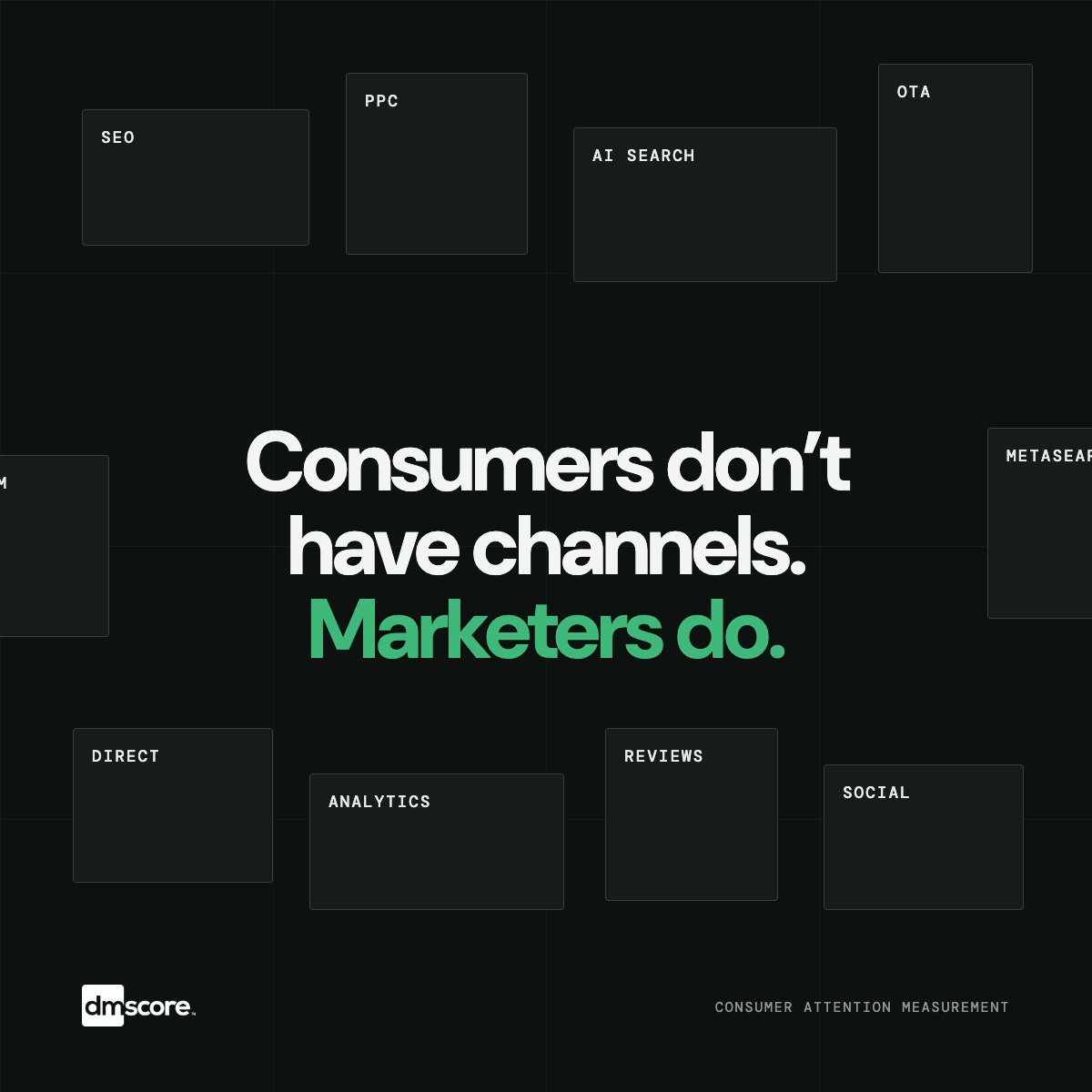
Today’s consumers rarely follow a linear path to purchase. Before ever visiting a company’s website, they may consult AI assistants such as ChatGPT, Claude or Gemini, use search engines, browse Google Maps, compare reviews, explore recommendation platforms or seek advice through online communities.
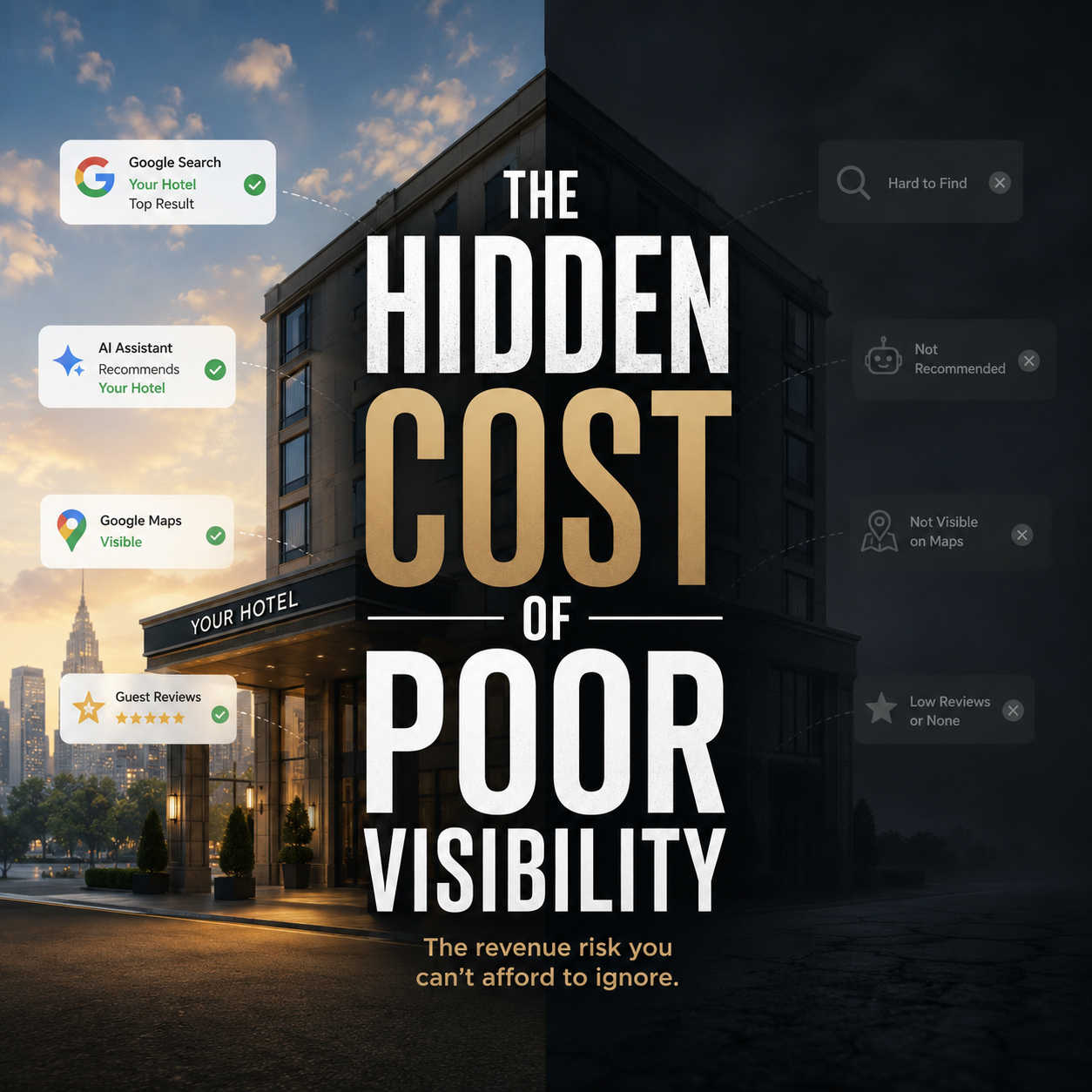
By the time they reach a company’s website, they may have already formed a preference, or eliminated that business from consideration entirely.
The website hasn’t become irrelevant, it’s just that its role has changed.
Increasingly, it represents the end of the evaluation process rather than the beginning of the customer journey.
Why we see this differently.
Our executive team helped build WebSideStory, one of the pioneers of web analytics whose technology ultimately became part of Adobe Analytics.
For decades, our industry worked to answer questions such as:
- How many people visited our website?
- Which campaigns converted best?
- Where did customers abandon the funnel?
- Which channels generated the strongest return on investment?
Those questions transformed digital marketing. They gave marketers unprecedented visibility into what happened after someone reached a website and established many of the KPIs that continue to shape boardroom conversations today.
They also trained an entire generation of marketers, including ourselves, to evaluate marketing performance primarily through the lens of website behavior. And that’s why this shift feels so familiar.
We’re not arguing against web analytics because we helped build it. We’re arguing that today’s customer journey demands an additional way of measuring marketing performance.
Every generation creates the measurements it needs, so every generation must also be willing to question whether those measurements still reflect how customers actually behave.
After all, mental models create measurement models.
Marketing has entered a new measurement era.
Throughout history, every major shift in consumer behavior has produced a new generation of marketing measurement.
- Web analytics emerged because websites transformed commerce.
- Search engine optimization emerged as search engines transformed discovery.
- Social media introduced engagement metrics as conversations moved online
- While marketing automation reshaped attribution as the customer journey became increasingly digital.
None of these measurement disciplines emerged because new technology existed. They emerged because consumer behavior changed and the same thing is happening today.
Consumers no longer move through a predictable, website-centric journey. Before they ever visit a company’s website, they increasingly research businesses across AI assistants, search engines, maps, reviews, recommendation platforms and countless other digital touchpoints.
That shift changes more than marketing tactics because it changes the questions marketers need to answer.
For decades, digital marketing became remarkably good at measuring what happened after someone reached a website. We know who arrived, where they came from, which campaign influenced them and whether they converted.
Those insights remain enormously valuable, they just simply answer a different question: They explain what happened after consumers discovered a business, but reveal very little about whether consumers discovered it in the first place.
That isn’t a failure of web analytics. It’s simply asking web analytics to answer a question it was never designed to solve.
Consumer behavior evolved faster than the industry’s measurement model.
Measurement Inertia.
Why didn’t marketing measurement evolve at the same pace? Because businesses don’t just resist new technology. They also resist new ways of measuring success.
Organizations rarely wake up and decide to measure the wrong things. Dashboards become institutionalized. Executive reports become standardized. Incentives become aligned around familiar KPIs. Over time, yesterday’s measurements quietly become today’s assumptions.
We call this Measurement Inertia.
As Andrew Grove, former CEO of Intel, famously observed:
“The dangerous thing is there are important things and there are things that are easy to measure—but the correlation between the two may not be all that great.”
That observation feels particularly relevant today, because:
- Website traffic tells us who arrived.
- Conversions tell us who purchased.
- Revenue tells us the commercial outcome.
But none of those metrics tells us whether consumers ever considered a business in the first place.
Digital Visibility Measurement
Every measurement category exists because businesses need to answer a specific question. Finance measures financial performance. Web analytics measures traffic. SEO measures organic visibility.
But today’s customer journey demands another question:
How visible is my business before customers ever reach my website?
Existing marketing disciplines weren’t designed to answer that question… and this is why marketing has entered a new measurement era.
At DMscore, we call this new discipline Digital Visibility Measurement.
Rather than measuring what happens after customers arrive, Digital Visibility Measurement focuses on how visible a business is across digital environments where consumers now research, compare and evaluate brands.
Like every major measurement category before it, this discipline requires a common KPI.
We call that KPI Online Share of Attention.
Online Share of Attention measures a business’s visibility across AI assistants, search engines, maps, reviews, recommendation platforms and the growing number of digital environments that influence purchasing decisions before someone ever reaches a company’s website.
This isn’t about replacing traditional marketing metrics. It’s about measuring a different stage of the customer journey.
Website traffic tells us who arrived, conversions tell us who purchased, revenue tells us the commercial outcome, and Online Share of Attention tells us whether consumers discovered your business in the first place. That’s the distinction.
Visibility precedes traffic.
Attention precedes engagement.
Discovery precedes conversion.
Businesses cannot optimize what consumers never see.
The question every business leader should ask.
The next decade won’t be defined by the organizations that adopted artificial intelligence first. It will be defined by the organizations willing to challenge the assumptions that made them successful in the first place.
Disruptive technology rarely defeats experienced businesses. Outdated mental models do and artificial intelligence will continue reshaping marketing.
The more important question is whether organizations are still measuring success as though their customers behave the way they did five years ago?
Every generation of consumer behavior creates a new generation of measurement and history suggests this moment is no different. The greatest risk facing modern marketers isn’t failing to adopt new technology. It’s continuing to measure the future with metrics designed for the past.
So before asking,
“What’s the next technology?”
perhaps business leaders should first ask a different question:
“Am I measuring my business the way today’s customers actually behave?”